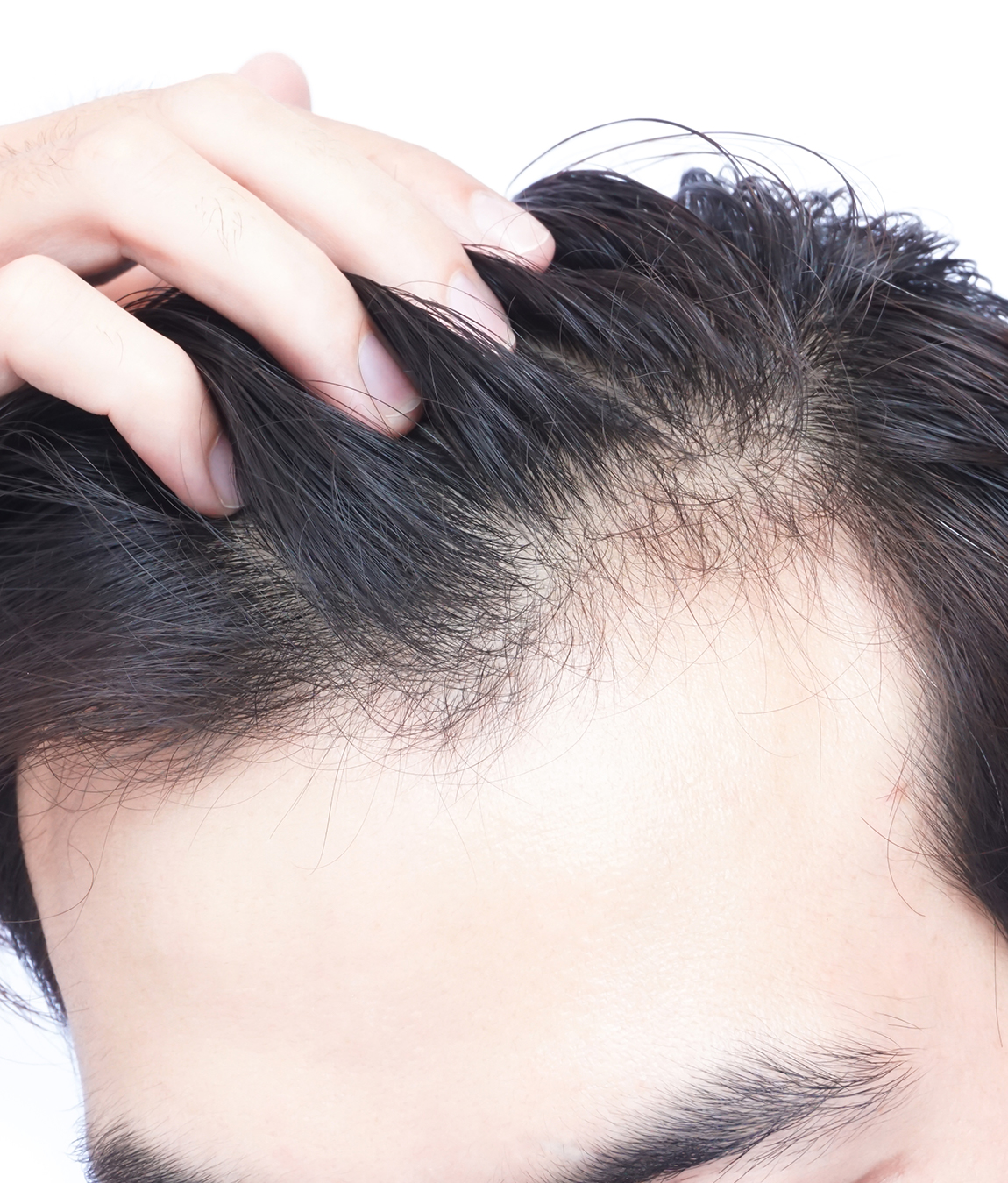
“How many grafts do I need?” is usually the first question people ask, and the answer drives the price. Clinics often give a number from a few photos, but a good estimate balances two things: how many grafts the thinning area needs, and how many your donor area can safely give, now and in the future. This guide explains the logic so you can judge the numbers you are quoted.
Grafts, hairs and density
A graft (follicular unit) contains one to four hairs; the average is often around two. So 3,000 grafts may mean roughly 6,000–7,000 hairs. Coverage depends on hairs per graft, hair thickness, curl and the contrast between hair and skin colour. Thick, wavy or salt-and-pepper hair gives more visual coverage per graft than fine dark hair on pale skin.
Typical ranges by Norwood stage
| Norwood stage | Typical pattern | Commonly quoted grafts |
|---|---|---|
| 2–3 | Receding temples and hairline | about 1,500–2,500 |
| 3 vertex | Hairline plus early crown thinning | about 2,000–3,000 |
| 4 | Deeper recession, thinning crown, band of hair remains | about 2,500–3,500 |
| 5 | Front and crown merging | about 3,500–4,500 |
| 6–7 | Extensive baldness | 4,500+ and often two sessions; full coverage may not be possible |
These are orientation figures from common clinic practice, not targets. Your own number depends on your donor area and goals.
Donor capacity: the real limit
The safe donor zone at the back and sides of the head has a limited number of grafts. Over a lifetime, many people can safely give somewhere in the region of 5,000–7,000 scalp grafts, sometimes more with good density, often less. Taking too many in one session can leave the donor area visibly thin, which is hard to fix. Beard or body hair can supplement in some cases. See failed transplant repair for what over-harvesting looks like.
Why “unlimited grafts” deserves a question
An “unlimited grafts” package does not change how many grafts your donor area has. Ask the clinic to state the planned number in writing and to explain how much donor reserve will remain afterwards.
Planning for the future
If you are young or still losing hair, a good plan prioritises the front and mid-scalp, keeps the hairline age-appropriate and leaves grafts for later. Medical treatment to stabilise loss is often recommended. Read how long a transplant lasts and crown transplants.
How to get a reliable estimate
- Send the same clear photos to several clinics and compare their numbers and reasoning.
- Ask for the estimate per area: hairline, mid-scalp, crown.
- Ask how they assessed donor density.
- Ask for a graft count report after surgery.
Frequently asked questions
Is more grafts always better?
No. More grafts in the wrong place, or at the expense of your donor area, can make things worse long term.
Can I have 6,000 grafts in one day?
Some clinics advertise it. Very large sessions increase strain on the donor area and on graft handling; ask why it is needed and who will do the work.
How much does each graft cost?
See our cost guide.
This article is general information, not medical advice. See our medical disclaimer.
[…] on your donor density, which only an in-person or detailed photo assessment can estimate. Our graft estimate guide explains how clinics arrive at a […]
[…] model you are offered, ask for the planned graft number in writing and how it was estimated. Our graft estimate guide explains the usual ranges for each stage of hair […]
[…] The clinic should estimate your donor density and how many grafts can be safely taken now, and how many should be kept for the future. Many use trichoscopy (magnified scalp imaging) at the in-person consultation. You should receive a proposed graft number for each area. See how graft numbers are estimated. […]