The consultation is where a good hair transplant starts. It is also where you can tell a careful clinic from a sales operation. A thorough consultation focuses on your diagnosis, your donor area and your long-term plan; a weak one focuses on a price and a booking date. Here is what should happen and what to ask.
Step 1: the photos
For an online consultation, clinics usually ask for clear photos in good light from the front, both sides, the top (head tilted forward), the crown and the back (donor area). Take them with dry hair, without products, and add a close-up of the hairline. Short or wet hair makes thinning easier to judge. Some clinics also ask for a short video.
Step 2: your history
A responsible clinic will ask about:
- When hair loss started, how fast it is progressing and family history
- Medical conditions, medication (especially blood thinners), allergies and smoking
- Previous hair transplants or treatments such as minoxidil or finasteride
- For women: hormonal history, pregnancy and the pattern of thinning
If nobody asks, that is a warning sign.
Step 3: diagnosis and suitability
Not all hair loss is suitable for surgery. Diffuse thinning across the whole scalp, active alopecia areata or some scarring conditions may need medical treatment first. Young patients with fast-progressing loss may be advised to wait or to start medication. A clinic that says yes to everyone is not assessing you.
Step 4: donor assessment and graft plan
The clinic should estimate your donor density and how many grafts can be safely taken now, and how many should be kept for the future. Many use trichoscopy (magnified scalp imaging) at the in-person consultation. You should receive a proposed graft number for each area. See how graft numbers are estimated.
Step 5: hairline and technique
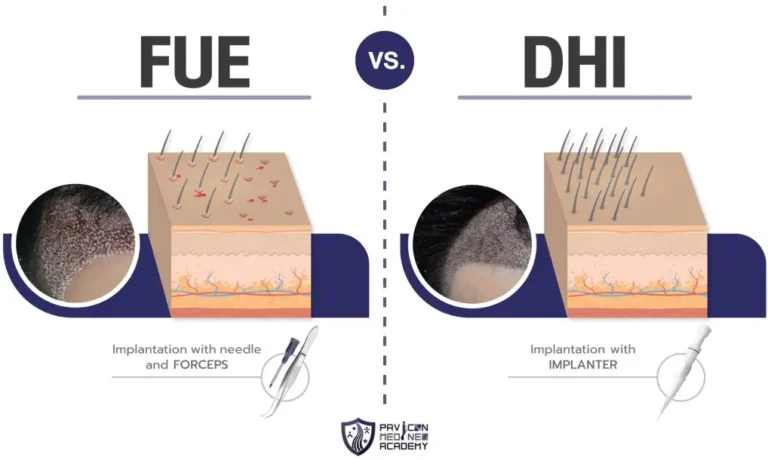
A hairline proposal, ideally drawn on a photo, and an explanation of which technique (FUE, DHI or a combination) is proposed and why. See hairline design.
Step 6: the written quote
You should receive in writing: graft number, technique, responsible doctor, what is included (hotel, transfers, medication, PRP), price, deposit and cancellation terms, and follow-up arrangements.
Questions to ask
- Who will I speak to: a doctor or a sales coordinator?
- Who will perform each step on the day?
- How many patients do you operate on per day?
- How many grafts will remain in my donor area afterwards?
- What medical treatment do you recommend alongside surgery?
- What happens if growth is poor?
Compare at least three clinics; our list of doctor-led hair transplant clinics in Istanbul is a starting point.
On the day of surgery
Expect a final in-person consultation with the doctor, blood tests, a check of the hairline drawing and the opportunity to change your mind. Ask questions until you are comfortable.
Frequently asked questions
Are online consultations reliable?
They are good for a first estimate. The final plan should be confirmed in person before surgery.
Is the consultation free?
Most clinics offer free online consultations.
Should I feel pressured to book?
No. Discounts that expire in 24 hours are a sales tactic, not a medical reason.
This article is general information, not medical advice. See our medical disclaimer.