FUE vs DHI Hair Transplant: How the Techniques Really Differ
Almost every clinic in Istanbul will offer you a choice between “Sapphire FUE” and “DHI”, often with a price difference of several hundred euros. The marketing makes them sound like completely different operations. They are not. Both are forms of follicular unit extraction, the grafts come from the same place, and the long-term result depends far more on who plans and performs the surgery than on the tool used. This guide explains what actually differs, so you can judge whether the more expensive option is worth it for your hair.
What FUE and DHI have in common
In both techniques, individual follicular units (groups of one to four hairs) are removed one by one from the donor area at the back and sides of the head with a small round punch, usually 0.6 to 0.9 mm wide. Hair in this zone is genetically resistant to the hormone DHT, which is why it keeps growing after it is moved. There is no long strip scar as with the older FUT (“strip”) method; instead you get hundreds of tiny dot scars that are hidden by hair once it grows back.
The difference between the methods is only in the second half of the operation: how the grafts are put into the thinning area.
How classic and Sapphire FUE implant grafts
With FUE, the surgeon first opens all the recipient incisions (“channels”) in the thinning area. The angle, direction and density of these channels decide how natural the result will look, so this is the step where the surgeon’s skill matters most. Technicians then place the grafts into the channels with fine forceps.
“Sapphire FUE” simply means the channels are opened with small blades made of synthetic sapphire instead of steel. Sapphire blades stay very sharp and can be made in precise sizes, which some surgeons feel causes slightly less tissue trauma and allows dense packing. It is a refinement of the same procedure, not a separate technique, and there is no strong evidence that it changes final graft survival on its own.
How DHI implants grafts
DHI (direct hair implantation) uses a hollow needle device called a Choi implanter pen. Each graft is loaded into the pen, and the pen creates the opening and places the graft in one movement. Because channels are not opened in advance, DHI is useful for placing grafts between existing hairs without damaging them, which is why it is often offered for unshaven procedures and for hairlines.
DHI is slower. Several pens and an experienced team are needed to keep grafts moving, so the number of grafts that can be placed in one day is usually lower than with FUE.
Side-by-side comparison
| FUE / Sapphire FUE | DHI (Choi pen) | |
|---|---|---|
| Extraction | Individual punch extraction | Identical |
| Implantation | Channels opened first, grafts placed with forceps | Pen opens and implants in one step |
| Typical grafts in one day | Often 3,000–4,500 depending on donor and team | Often 2,000–3,000 |
| Shaving | Usually full shave | Partial or unshaven is more practical |
| Best suited to | Larger areas, crown, higher Norwood stages | Hairlines, filling between existing hair, smaller areas |
| Price in Istanbul | Usually the lower-priced option | Usually a few hundred euros more |
Graft numbers above are typical ranges quoted by clinics, not limits. A safe number for you depends on your donor density, which only an in-person or detailed photo assessment can estimate. Our graft estimate guide explains how clinics arrive at a number.
What about “robotic” FUE?
Some clinics use robotic systems such as ARTAS to assist with extraction. The robot helps with consistent punch depth and angle, but it does not design the hairline or implant the grafts, and it is mainly suited to straight dark hair. In Turkey robotic FUE is far less common than manual or motorised FUE, and it is usually more expensive.
Which method fits which situation
- Large bald area or crown work: FUE is usually more practical because more grafts can be placed in one session.
- Rebuilding a hairline, or adding density among existing hair: DHI or a combination is often suggested, and unshaven DHI may suit people who cannot take time off.
- Combination plans: Many surgeons use DHI or fine single-hair grafts at the front and FUE behind it. This is a reasonable approach, but ask exactly which part of the procedure each method is used for and why.
Beard, eyebrow and unshaven transplants have their own considerations, covered in separate guides.
The question that matters more than the technique
Results depend mainly on three things: how the hairline is designed, how carefully the grafts are extracted and handled, and how the donor area is protected for the future. In high-volume clinics much of the work may be done by technicians. Before choosing a method, ask:
- Who designs the hairline, and who opens the channels or uses the pens?
- How many procedures does the team do per day?
- How many grafts do they plan, and how much donor reserve will remain for later?
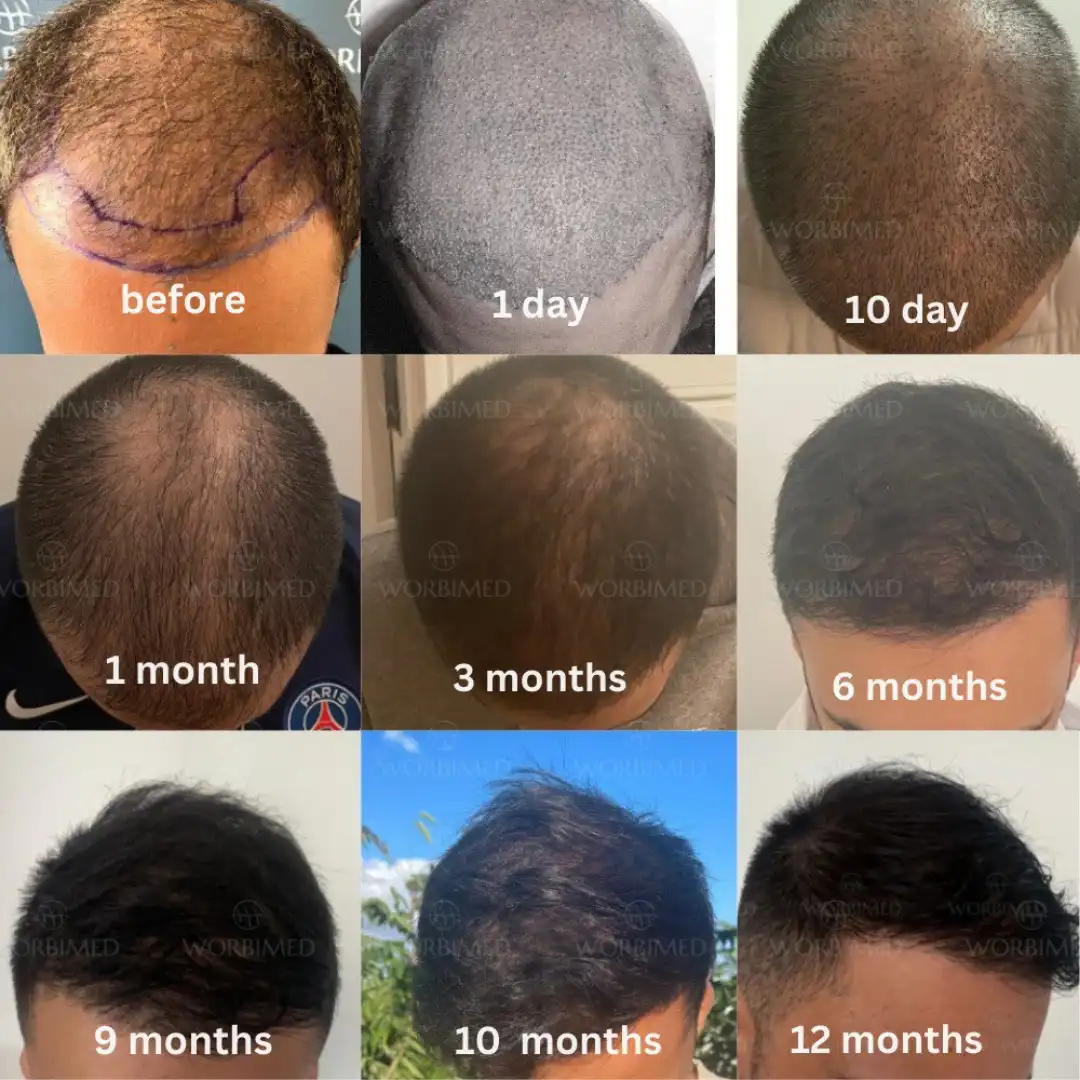
- Can you see before-and-after photos taken in consistent light, at least 12 months after surgery?
The International Society of Hair Restoration Surgery (ISHRS) recommends that surgical decisions and key surgical steps are carried out by a licensed physician. Our guide on how to choose a hair transplant surgeon lists further questions.
Frequently asked questions
Is DHI more natural than FUE?
Not automatically. A natural result comes from correct angles, direction and the use of single-hair grafts at the front. Both methods can achieve this in experienced hands, and both can look unnatural if done poorly.
Does DHI heal faster?
Healing is broadly similar. Small scabs usually fall off within 7–10 days with both methods, and the donor area heals in the same way because extraction is identical. See the recovery timeline for details.
Is one method more painful?
Both are done under local anaesthesia. The injections at the start are the most uncomfortable part; the rest of the day is mostly tiring rather than painful.
What do the methods cost in Turkey?
Prices vary widely by clinic and what is included. Our hair transplant cost guide breaks down typical ranges and what packages usually contain.
This article is general information, not medical advice. Discuss your own situation with a qualified doctor. See our medical disclaimer.
[…] techniques require identical graft protection. Review our comparative analysis on Comparing FUE and DHI Hair Transplants to learn […]
[…] Comparing FUE and DHI Hair Transplants: Which Technique Fits Best […]
[…] For an exhaustive breakdown of surgical differences, read our detailed analysis on Comparing FUE and DHI Hair Transplants. […]
[…] our detailed breakdown on Comparing FUE and DHI Hair Transplants to see which fits your hair […]
[…] Yes, Choi implanter pens are excellent for following the multi-directional angles of the whorl. Review our FUE vs DHI Comparison. […]
[…] For an in-depth breakdown of surgical differences, explore our guide on Comparing FUE and DHI Hair Transplants. […]
[…] Comparing FUE and DHI Hair Transplants: Which Technique Fits Best […]
[…] Sapphire FUE is superior for large bald areas requiring over 4,000 grafts, while DHI is ideal for hairline precision without shaving. Compare both in our FUE vs DHI Comparison Guide. […]
[…] Our guide on how to choose a hair transplant surgeon has a longer checklist and the red flags to watch for. If you are still deciding on the method, read FUE vs DHI. […]