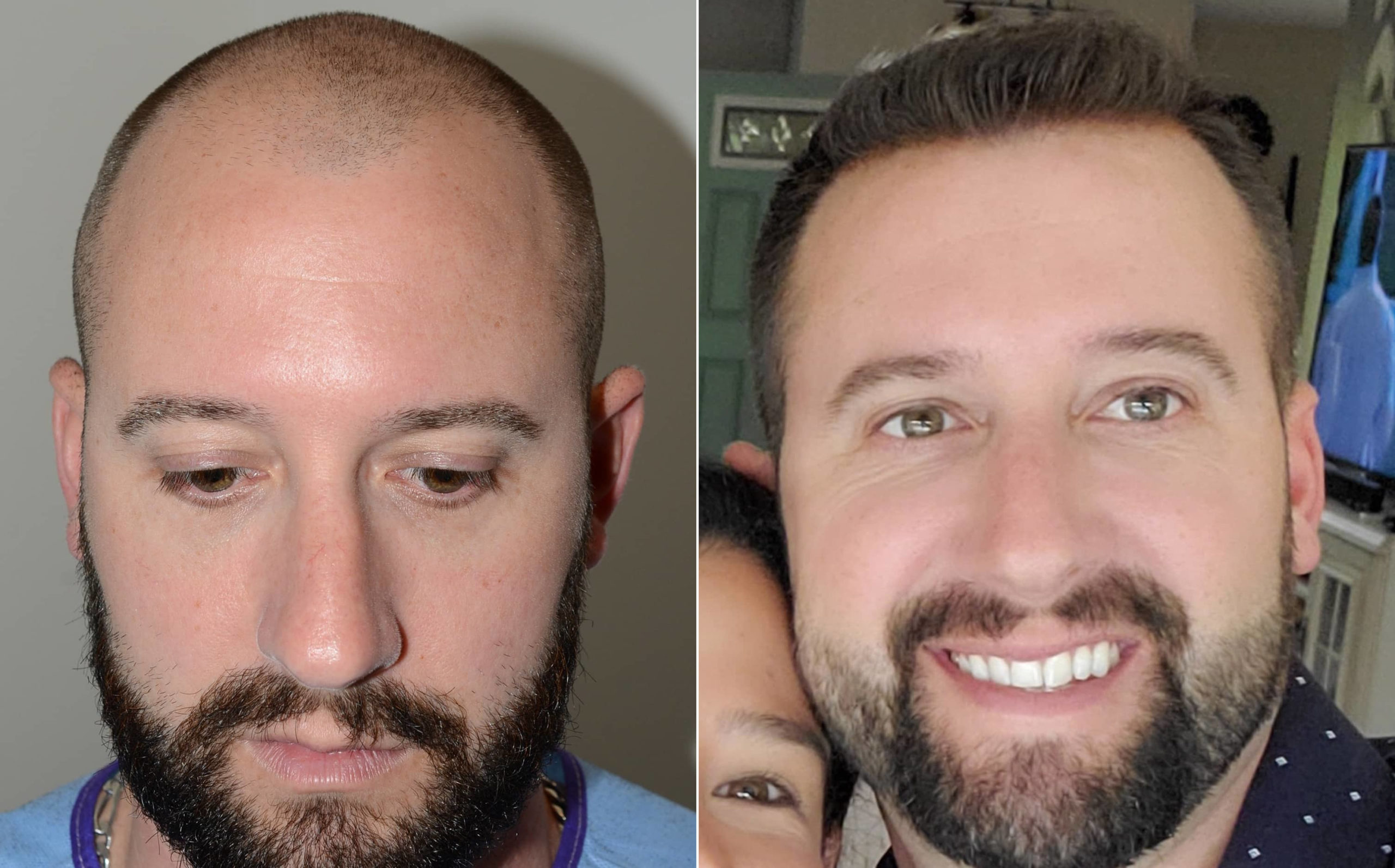
For many people, the hardest part of a hair transplant is not the surgery but walking back into the office with a shaved head and visible scabs. Unshaven hair transplantation aims to avoid that by keeping most of your hair long, so the work is hidden. It is a genuine option in experienced hands, but it has limits worth understanding.
Types of unshaven procedure
- Fully unshaven: individual hairs are trimmed only where grafts are extracted, scattered across the donor area, and grafts are implanted between existing long hairs. Very discreet but slow and expensive.
- Partially unshaven (strip-shaved donor): one or more narrow strips are shaved in the donor area and covered by longer hair above; the recipient area is not shaved. The most common compromise.
- Long-hair transplant: grafts are extracted with the hair shaft left long, so the result can be seen immediately. A specialist technique offered by a limited number of clinics.
How it works
Extraction is FUE, either from shaved strips or from individually trimmed hairs. Implantation usually uses DHI pens or very fine incisions, placed carefully between existing hairs so they are not damaged. The team must part and hold back long hair throughout, which makes the procedure longer.
Who it suits
- People who need to return to work or social life quickly
- Women, who usually prefer not to shave
- Adding density to thinning but not bald areas
- Hairline refinement and small corrections
Limitations
- Fewer grafts per session: often 1,500–2,500, compared with more for shaved procedures.
- Higher price: the extra time usually adds to the cost.
- Not ideal for large bald areas: there is little existing hair to hide the work, and more grafts are needed.
- Harder to see what you are doing: requires an experienced team to avoid damaging existing hair.
Recovery
Crusts and redness are hidden under the hair in most cases, which is the point. You still need to follow washing and protection rules for 10–14 days. Existing hair around the grafts may shed temporarily (shock loss) before regrowing. See recovery timeline.
Questions to ask
- Is it fully or partially unshaven? Where will strips be shaved?
- How many grafts can you place unshaven in my case?
- Who implants the grafts, and how many unshaven cases has the team done?
- Can I see unshaven results at 12 months?
Frequently asked questions
Is unshaven FUE as effective as shaved FUE?
Growth can be similar in skilled hands, but fewer grafts can be placed per session.
How long should my hair be?
Clinics often recommend at least 2–3 cm on top and longer hair above the donor area to cover shaved strips.
Which technique is used?
Most often DHI. See DHI in Istanbul.
This article is general information, not medical advice. See our medical disclaimer.
[…] eyebrow and unshaven transplants have their own considerations, covered in separate […]
[…] Unshaven procedures for people who cannot have a visible shaved head at work. See our unshaven hair transplant guide. […]