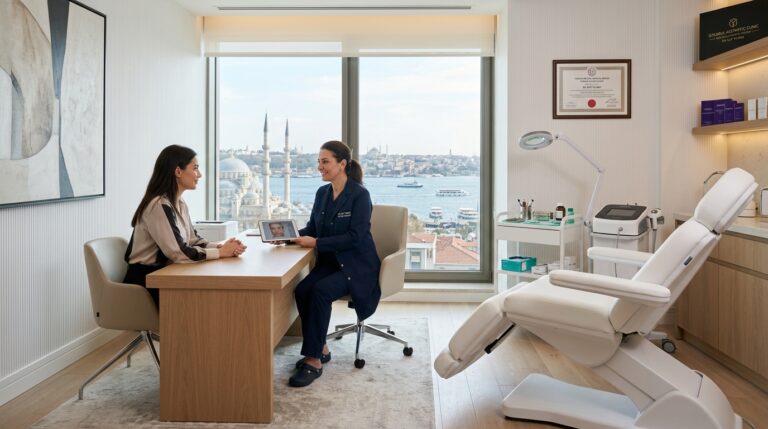
Istanbul has many highly trained plastic surgeons and modern hospitals, and thousands of international patients have surgery there every year. It also has a crowded market of agencies and package deals where the surgeon may be little more than a name on a brochure. Most serious problems after cosmetic surgery abroad are linked to avoidable factors: inadequate checks, unsuitable facilities, combining too much surgery, and flying home too soon. This guide covers the safety basics.
1. Check the surgeon
- Get the full name of the surgeon who will operate on you, not just the clinic.
- Confirm they are a plastic surgeon (in Turkey: “Plastik, Rekonstrüktif ve Estetik Cerrahi” specialist).
- Check membership of the Turkish Society of Plastic, Reconstructive and Aesthetic Surgery and international societies such as ISAPS.
- Ask how often they perform your specific operation.
- Insist on a consultation with the surgeon before surgery, not only with a coordinator.
2. Check the hospital
- Which hospital will you be operated in? Is it licensed for surgery by the Ministry of Health?
- Is there an intensive care unit on site?
- Who gives the anaesthetic? It should be a qualified anaesthesiologist.
- How many nights will you stay in hospital?
3. Be honest about your health
Tell the team about all medical conditions, medications, supplements, smoking, previous surgeries and any history of blood clots. Expect blood tests and, depending on age and procedure, an ECG or other checks. A clinic that doesn’t ask is not taking safety seriously.
4. Think twice about combining procedures
Packages that combine several major operations in one session (for example liposuction, tummy tuck, breast surgery and BBL) increase operating time, blood loss and the risk of complications such as blood clots. A careful surgeon may recommend splitting procedures.
5. Plan enough recovery time before flying
Long flights after surgery increase the risk of deep vein thrombosis and pulmonary embolism. Many surgeons advise staying 7–14 days depending on the procedure. Ask about blood-thinning injections, compression stockings and moving regularly on the flight.
6. Arrange aftercare at home
- Get a written discharge summary with the procedure details and medications.
- Know who to contact if there is a problem, and how quickly they respond.
- Consider registering with your local GP and telling them about your surgery.
Warning signs after surgery
Seek urgent medical help for chest pain, breathlessness, a swollen painful calf, high fever, spreading redness, wound discharge, or heavy bleeding. Do not wait for the clinic to reply in an emergency.
Where to go next
Compare plastic surgery clinics in Istanbul, and read our procedure guides on rhinoplasty, breast augmentation and BBL safety.
Frequently asked questions
Is plastic surgery in Turkey safe?
It can be, with a qualified plastic surgeon, a proper hospital and enough recovery time. Risks rise with shortcuts.
Should I book through an agency?
Agencies can help with logistics, but always confirm the surgeon and hospital independently.
What if I have a complication at home?
Your local health service will treat emergencies. Discuss with the clinic beforehand how follow-up and revisions are handled.
This article is general information, not medical advice. See our medical disclaimer.