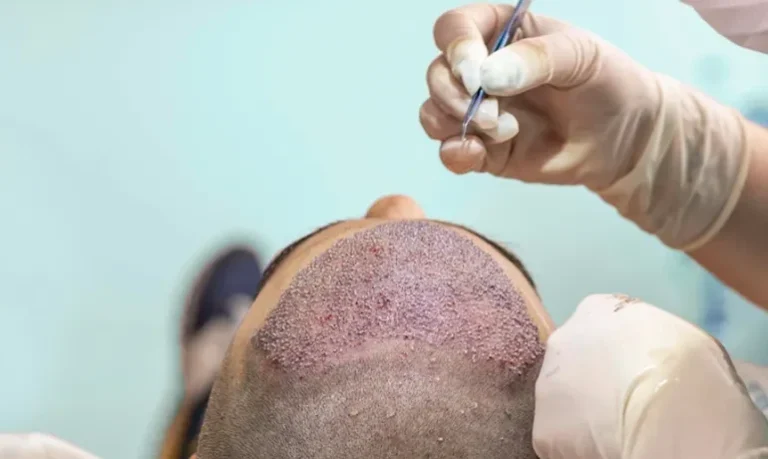
The first two weeks after a hair transplant decide how well the grafts settle. Most of the work is simply not disturbing them while they anchor. Your clinic will give you instructions specific to your procedure, and those always come first. These practical tips, collected from common clinic guidance and patient experience, help with the day-to-day details.
The first 72 hours
- Sleep semi-upright at about 45 degrees for the first 3–5 nights, using a travel pillow so your head doesn’t roll onto the recipient area. It also reduces swelling.
- Don’t touch the grafts. No scratching, rubbing or picking. Keep hands, phones and pillows away from the front of the head.
- Manage swelling. Forehead swelling often appears on day two or three. Follow the clinic’s advice, which may include cold packs on the forehead (never on the grafts) and medication.
- Take medication as prescribed, including painkillers and any antibiotics. Avoid aspirin and anti-inflammatories unless your clinic approves them.
Days 3–14
- Wash exactly as shown. Usually lotion first, then gentle foam and pouring water, no rubbing, pat dry. See our washing routine guide.
- Let scabs come off naturally with washing, typically by day 10. Never pick them.
- Itching is normal as the scalp heals. Ask the clinic about soothing sprays rather than scratching.
- Avoid sweating and heavy exercise for at least 1–2 weeks, and saunas, steam rooms, swimming pools and the sea for about 4 weeks.
- Protect from sun. Stay in shade and, after the first week or so, wear a loose hat if you must be outside for long.
Lifestyle
- Alcohol and smoking: avoid alcohol for at least several days and smoking for as long as possible, ideally weeks, as both affect healing and blood flow.
- Hats: a loose cap or bucket hat is usually fine after 7–10 days; avoid tight caps and helmets for longer. Ask your clinic.
- Flying home: usually fine after the first wash. Keep the head away from overhead lockers, carry a neck pillow, and drink water.
Warning signs
Contact your clinic or a local doctor if you have increasing pain after day three, spreading redness, warmth, pus, fever, or bleeding that does not stop with gentle pressure. A few small pimples in the recipient area around months 2–4 are common as new hairs come through, but painful or widespread ones should be checked.
What comes next
Expect most transplanted hairs to shed between weeks 2 and 6; new growth usually starts around month 3. The full timeline is in our recovery timeline.
Frequently asked questions
When can I go back to work?
Desk work is often possible after 3–5 days, depending on swelling and how visible the area is.
Can I use hair products?
Avoid gels, sprays, dyes and styling heat for about a month, or as advised.
When can I cut my hair?
Scissor cuts after about a month; clippers on the recipient area usually later.
This article is general information, not medical advice. Follow your clinic’s instructions. See our medical disclaimer.