Afro-textured hair can give excellent results in a hair transplant, because tightly curled hair covers the scalp very effectively. But the same curl that creates great coverage also makes the procedure technically harder. The follicle beneath the skin is curved, so extraction with standard techniques can cut through it. This guide explains what is different and what to look for in a clinic.
What makes Afro hair different
- Curved follicles: the curl continues under the skin, so a straight punch can transect (cut) the follicle if not carefully aligned.
- Lower density but higher coverage: Afro hair often has fewer follicles per square centimetre, but each curly hair covers a larger area, so fewer grafts can create a full look.
- Skin considerations: darker skin has a higher tendency to form keloid or hypertrophic scars and pigment changes, which needs assessment beforehand.
Common reasons for treatment
- Male pattern hair loss
- Traction alopecia from long-term braids, weaves, locs or tight styles, especially along the hairline and temples. Hair transplants can work well once the traction has stopped.
- Restoring a defined hairline or temples
How experienced clinics adapt FUE
- Using wider or specially shaped (flared, trumpet or hybrid) punches and shallower initial depth to avoid cutting the curved follicle
- Test extractions at the start of surgery to check transection rates
- Careful handling and implantation that respects the curl direction
- Sometimes slightly larger incisions to accommodate curved grafts
FUT (strip) is sometimes recommended for very curly hair because grafts are dissected under a microscope, but it leaves a linear scar, which may be a concern with keloid tendency.
Questions to ask
- How many patients with Afro-textured hair have you treated? Can I see their 12-month results?
- What punch type and size do you use for curly hair?
- Will you do a test extraction?
- Have you assessed my keloid risk?
- For traction alopecia: how do you assess whether the area is stable?
Our list of doctor-led clinics in Istanbul and surgeon checklist are good starting points.
Recovery and results
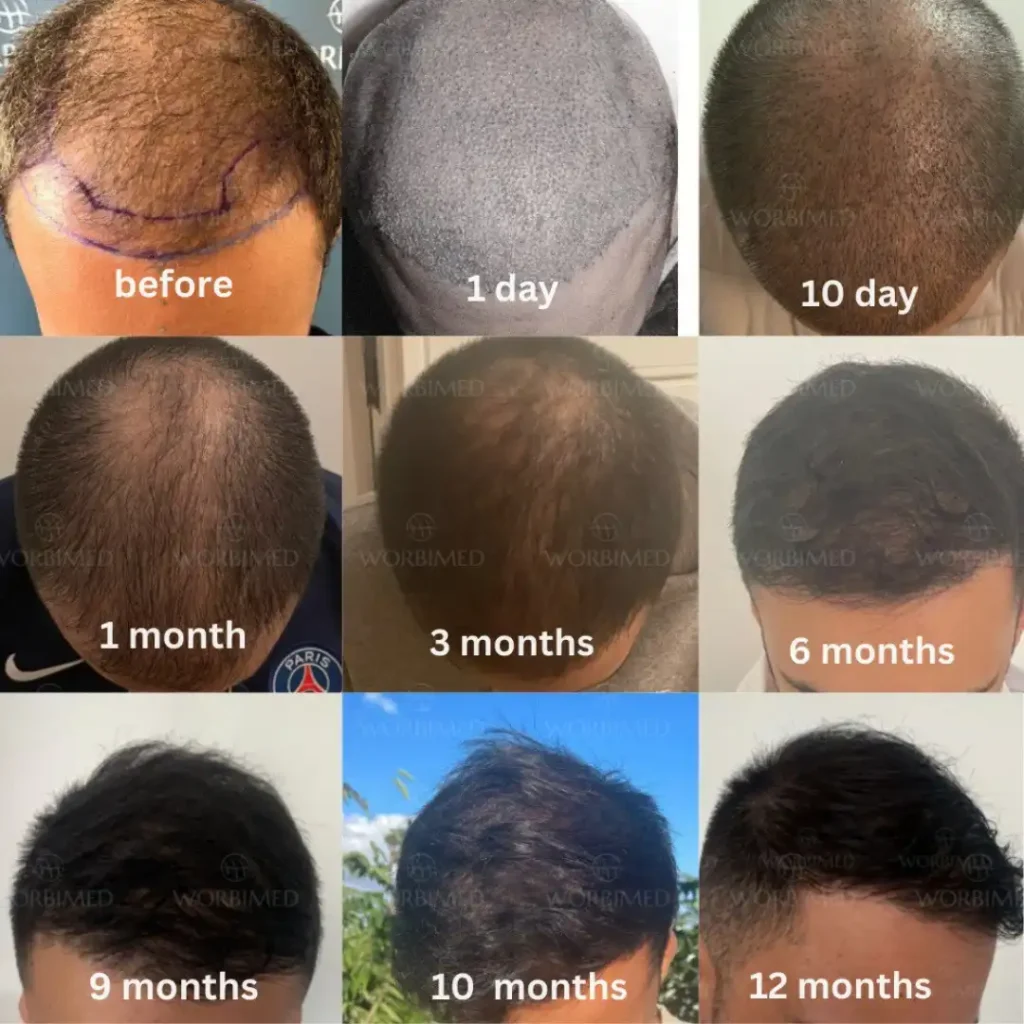
Recovery is similar to other transplants, though redness can show differently on darker skin and pigment changes may take longer to settle. New growth appears from about month 3; final results around 12 months. Avoid tight styles and heavy traction on the treated area for several months, and longer-term if traction caused the original loss.
Frequently asked questions
Do I need fewer grafts with Afro hair?
Often yes for the same visual coverage, but donor density can also be lower, so planning is still careful.
Is DHI suitable?
It can be, with experienced teams. See FUE vs DHI.
What does it cost in Turkey?
Usually similar to other FUE procedures; see our cost guide.
This article is general information, not medical advice. See our medical disclaimer.