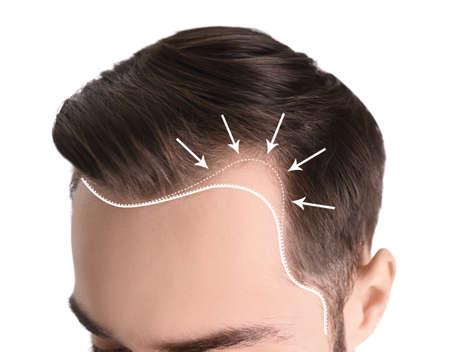
The hardest part of a hair transplant is often not the operation but the year that follows. The result you paid for appears slowly, and for a few months the transplanted area can look worse than before. Knowing what is normal at each stage makes that period much easier. This timeline describes the typical course after FUE or DHI. Your clinic’s instructions always take priority, because they know exactly what was done.
Before surgery: the week that helps recovery
- Tell the clinic about all medication and supplements. Blood thinners, some supplements (such as fish oil or vitamin E) and alcohol can increase bleeding and are usually paused for several days beforehand, but only stop prescribed medicine with your doctor’s agreement.
- Avoid smoking for as long as possible before and after; it reduces blood flow to the scalp.
- Pack a button-up or zip top so you do not pull clothes over your head afterwards, and a travel neck pillow for sleeping upright.
Days 1–3: swelling and protection
The scalp is numb at first, then tender. The donor area usually aches more than the recipient area. Swelling of the forehead often appears on day two or three and can reach the eyes; sleeping semi-upright and following the clinic’s advice on cold compresses (not on the grafts) helps. Grafts are vulnerable in this period, so avoid touching, scratching or bumping the recipient area. The first wash is normally done at the clinic on the day after surgery.
Days 4–10: washing and scabs
You will wash the head gently once or twice a day as instructed, usually by applying lotion, then pouring water with foam, never rubbing. Small crusts form around each graft and loosen with washing. By day 10 most crusts are gone. The donor area is normally healed enough that short hair covers it. See our guide to the post-transplant washing routine for a step-by-step method.
Weeks 2–8: shedding (“shock loss”)
Most transplanted hair shafts fall out between weeks two and six. This is expected: the follicle stays in the skin and enters a resting phase. Some existing native hair around the area may also shed temporarily. The area can look similar to how it did before surgery, sometimes with redness. This is the stage people find most discouraging, but it is not a sign of failure.
Months 3–4: first new growth
Fine, thin hairs start to appear, often unevenly. Some may come through as small spots like ingrown hairs; these usually settle without treatment, but ask the clinic if they become painful. Redness should be fading by now, although it can last longer on fair skin.
Months 5–8: visible change
Hairs grow longer and begin to thicken and darken. Many people see the biggest visual change in this period, and it becomes easier to style the hair.
Months 9–12 and beyond: final result
Most of the result is visible by 12 months. The crown and denser procedures can keep improving until 15–18 months. This is the earliest point at which to judge the outcome or discuss any further work.
| Period | What you will typically see |
|---|---|
| Days 1–3 | Tenderness, possible forehead swelling, grafts very fragile |
| Days 4–10 | Daily gentle washing, crusts loosen and fall off |
| Weeks 2–8 | Transplanted hairs shed; area may look like before surgery |
| Months 3–4 | First fine hairs appear |
| Months 5–8 | Hairs thicken; clear visual improvement |
| Months 9–18 | Final density and texture |
Returning to normal activities
| Activity | Common guidance (confirm with your clinic) |
|---|---|
| Desk work | After 3–5 days, depending on swelling and how visible the area is |
| Loose hat or cap | Often after 7–10 days; avoid tight hats that press on grafts earlier |
| Walking, light exercise | Light walking straight away; light exercise after about 1 week |
| Gym, running, heavy lifting | Usually after 2–4 weeks |
| Swimming, sauna, steam | Usually after about 4 weeks |
| Direct sun on the scalp | Cover or avoid for several weeks; sunburn on new grafts is a risk |
| Haircut with scissors | After about 1 month; clippers on the recipient area later |
When to contact the clinic or a doctor
Contact your clinic or a local doctor if you notice increasing pain after the first few days, spreading redness, pus, fever, or significant bleeding that does not stop with gentle pressure. Infections are uncommon but should be treated early.
Frequently asked questions
Can I fly home the day after surgery?
Most patients fly after the first wash, usually the day after surgery. Wear a loose cap if you want, protect the grafts when handling luggage, and use a neck pillow.
Is it normal that nothing grows for three months?
Yes. Growth before month three is unusual. Judge progress at six months and the result at twelve.
Will medication help the result?
Transplanted hair is resistant to hair loss, but native hair around it is not. Many doctors recommend treatment to protect existing hair. Discuss options with a doctor who knows your history.
This article is general information, not medical advice. Follow the instructions of your own clinic. See our medical disclaimer.
[…] Hair Transplant Recovery Timeline: Month-by-Month Growth […]
[…] For an expanded visual breakdown of growth phases, read our Hair Transplant Recovery Timeline Guide. […]
[…] To learn what happens during the upcoming shock loss phase, consult our Hair Transplant Recovery Timeline. […]
[…] at Month 3, accelerates by Month 6, and reaches final density between Months 12 and 14. Follow our Hair Transplant Recovery Timeline for […]
[…] Hair Transplant Recovery Timeline: Month-by-Month Guide […]
[…] both methods, and the donor area heals in the same way because extraction is identical. See the recovery timeline for […]
[…] Most packages assume three nights: arrival and consultation, surgery day, and the first wash before you fly. Flying is generally fine from the day after the wash, but check with your clinic, especially for long-haul flights. More on the first days in our recovery timeline. […]
[…] The crown often grows more slowly than the front. Results can continue to improve for 12–18 months, so be patient before judging. See the recovery timeline. […]